Things to Do in Uganda in September
September weather, activities, events & insider tips
Shoulder Season · Good Value
September Weather in Uganda
Temperature, rainfall and humidity at a glance
82°F (27°C)
High Temp
62°F (17°C)
Low Temp
4.3 inches (109 mm)
Rainfall
70%
Humidity
⚠ Afternoon thunderstorms build rapidly across the Lake Victoria basin and the southwestern highlands, arriving with little warning and sometimes producing lightning intense enough to halt outdoor activities. Avoid exposed ridgelines and open water during storms, and carry rain gear on every outing regardless of morning sky conditions.
⚠ Malaria risk is present at elevations below 1,500 m (4,921 ft), which includes Jinja, Murchison Falls National Park, Queen Elizabeth National Park, and the Lake Victoria shoreline. September's increasing moisture supports active mosquito populations at dusk and dawn. Consult a travel medicine specialist about prophylaxis well before departure, and use DEET-based repellent and bed nets in affected areas.
⚠ Road conditions on unpaved routes, the southwestern approach to Bwindi via Kabale and the Murchison Falls access road from Masindi, deteriorate as September rains accumulate. Clay surfaces become dangerously slippery, on steep grades. Self-driving without four-wheel-drive and off-road experience is inadvisable on these routes during the wet transition.
Is September Right for You?
Weigh the advantages and considerations before booking
Advantages
- + September lands in that sweet spot between Uganda's two dry spells and the heavier short rains of October and November. Gorilla trekking permits in Bwindi Impenetrable National Park are easier to secure now than during peak months. The forest trails are damp but not the ankle-deep mud of November. Gorilla families forage at lower elevations where bamboo shoots are fresh. Your tracking time drops from the eight-plus hours wet-season trekkers sometimes endure to a more manageable three to five.
- + Game drives in Queen Elizabeth National Park and along the Kazinga Channel hit their stride in September. The grass stays shorter than it will be by late October, which keeps animals visible. Early rains have started filling seasonal waterholes. Buffalo herds, Uganda kob, and elephant groups emerge from thicker bush. The light at dawn along the channel is exceptional. Hippo pods surface in mist that smells of damp papyrus. This is some of the best wildlife photography light Uganda offers all year.
- + Jinja, Uganda's adventure capital, runs at full capacity in September. The White Nile's water levels are high enough to make Grade 5 rapids seriously challenging but not so swollen that safety concerns shut down sections. Rafting operators favor morning launches when the Nile's surface stays glass-flat upstream. Spray downstream catches equatorial sunlight at a low angle. September also brings cleaner air around Lake Victoria than the burning season months earlier. Views from Jinja's banks stretch further.
- + Accommodation rates across most national parks drop noticeably from the June through August peak. September remains shoulder season for most safari lodges. The same banda overlooking the Bwindi valley or the same tented camp above the Kazinga Channel costs meaningfully less than six weeks earlier. Staff-to-guest ratios improve. You are more likely to have a gorilla tracking group of four rather than the maximum eight. Shared game-drive vehicles are less crowded.
Considerations
- − The rain in September is real, not cosmetic. Roughly ten days bring showers. In the mountainous southwest around Bwindi and Mgahinga, showers arrive as cold, persistent drizzle starting mid-afternoon and lasting into evening. Trails in the Impenetrable Forest turn slippery on clay-soil sections. You need proper ankle-supporting boots with aggressive tread. Trail runners will not suffice. The chill at 2,300 m (7,546 ft) elevation after rain drops temperatures to around 10 degrees C (50 degrees F). This surprises travelers who packed for equatorial heat.
- − Road conditions between parks deteriorate through September. The unpaved stretches connecting Fort Portal to Kibale and the winding descent from Kabale toward Bwindi's Buhoma sector suffer most. A five-hour drive in dry conditions can stretch past seven when clay roads get greasy. Self-driving demands full concentration with oncoming truck traffic and narrow mountain grades lacking guardrails. Most experienced travelers hire a driver-guide with proper ground clearance. This adds cost but removes the single most stressful part of an Uganda road trip.
- − Some smaller birding lodges and community tourism sites in eastern Uganda close or reduce operations during September. Visitor numbers drop below breakeven. If combining gorilla trekking with the Sipi Falls area or Mount Elgon, confirm availability before booking. The assumption that everything listed in a guidebook stays open year-round does not hold for Uganda's smaller operators in shoulder months.
Best Activities in September
Top things to do during your visit
September in Uganda arrives on the trailing edge of the country's drier spell. The landscape still carries the deep green saturation of recent rains. The skies clear enough to make overland travel reliable across most of the country. Daytime temperatures settle around the high twenties Celsius. Warm enough to raise a light sweat on any forest trail. Uganda's elevation tempers the heat. Nights stay cool enough for a fleece at higher altitudes around Bwindi and Kibale. Rainfall picks up modestly from August, averaging about ten wet days across the month. September storms tend to arrive in sharp afternoon bursts that clear within the hour. The red laterite roads steam afterward. The air grows thick with the scent of wet earth and flowering frangipani. The humidity hovers around seventy percent. It softens the light into the kind of diffuse gold that photographers chase. Uganda in September occupies a sweet spot. It sits between the June-to-August peak season and the heavier rains of October and November. Gorilla trekking permits, which sell out months in advance during July and August, become slightly easier to secure. The savannas of the north remain accessible. The Nile's flow at Jinja is strong and dramatic from upstream catchment. For travelers who prefer their encounters without crowds, September delivers. Fewer vehicles crowd the crater-rim tracks in Queen Elizabeth National Park. Shorter waits plague Murchison's top of the falls overlook. You get a palpable sense of having Uganda's wildest corners largely to yourself. The birdlife is extraordinary this month. Palearctic migrants begin arriving from Europe and Central Asia. They swell Uganda's already staggering count of over a thousand resident species. What makes September distinct from the calendar months surrounding it is the texture of daily life it reveals. Kampala's street-food vendors shift their offerings with the season's produce. Jackfruit ripens heavy on the trees lining Makerere Hill. Passion fruit turns deep purple at Nakasero Market. The charcoal-grilled plantains called gonja appear at every roadside stall. Their caramelized edges crackle under a squeeze of lime. The capital's rhythm feels unhurried compared to the December holidays or the Easter rush. The city's boda-boda drivers navigate the red-dust backstreets of Kabalagala and Bukoto with a looseness that disappears in busier months. Outside the cities, Uganda's countryside in September is an almost absurd shade of green. The banana plantations grow so dense they form walls along the highways. The terraced hillsides of the southwest layer like stacked felt.

Jinja day tour exploring the source of River Nile
guided_experienceThe day tour from Jinja to the source of the River Nile begins where the vast silvered surface of Lake Victoria funnels into a single muscular channel. The water accelerates with a visible shudder as it commits to its four-thousand-mile journey north toward the Mediterranean. Standing at the source point, you hear the deep hydraulic thrum of water moving at volume. You feel the cool mist on your forearms. You watch cormorants dive into the current with a recklessness that suggests they know exactly where the fish congregate in the eddy lines. The boat ride across to the brass marker at the source passes through beds of papyrus so tall they block the wind. The silence between engine cuts is filled with the high-pitched calls of malachite kingfishers darting between the reeds.
This is the geographic origin point of the world's longest river, and the physical sensation of watching an entire lake compress into a single channel is something no photograph can replicate.
Insider tip: Request the boat pilot to cut the engine at the papyrus channel about two hundred meters before the source marker so you can drift in quietly and spot the massive Nile perch rolling near the surface in the calmer water.
This month: September's Nile flow is strong from upstream catchment accumulated during the preceding wet months, making the visual drama at the source point more pronounced than during the drier January-February window.

Private 3 Day Gorilla Trekking Safari in Uganda
adventureThe three-day private gorilla trekking safari into Bwindi Impenetrable National Park compresses one of the planet's most consequential wildlife encounters into a format tight enough for travelers on limited schedules but deep enough to leave a permanent mark. The trek itself begins before dawn at the park headquarters in Buhoma or Ruhija. Rangers assign you a habituated gorilla family. You set off into forest so dense the canopy blocks the sky entirely. Your boots sink into leaf litter that smells of decomposing bark and wild celery. When you find the family, the encounter is governed by a strict one-hour window. Within those sixty minutes the proximity is staggering. A silverback the size of a refrigerator sits three meters away, pulling apart a bamboo shoot with hands that look disconcertingly human. His dark eyes track your movements with an intelligence that collapses the distance between species.
Fewer than a thousand mountain gorillas exist on Earth, and sitting among a wild family in the tangled understory of Bwindi is the single most emotionally overwhelming wildlife experience available to a civilian traveler.
Insider tip: Request the Rushaga or Nkuringo sector rather than the more popular Buhoma trailhead, as the trek distances are often shorter to reach the gorilla families and the forest trails pass through communities where you can hear children singing in the schoolrooms built into the hillside.
This month: September sits between Uganda's two wet seasons, and Bwindi's trails, while never dry, are less waterlogged than in October or November, reducing the mud-slog factor on steep ascents.

Memorable 3 days Murchison falls.
otherThree days at Murchison Falls National Park takes you to the point where the entire White Nile forces itself through a gap barely seven meters wide. It detonates into the gorge below with a roar you feel in your sternum from the viewing platform above. The mist column rising from the falls carries a perpetual rainbow when the sun hits it right. The rocks at the lip are slick with spray and colonized by mosses so green they look painted. Beyond the falls, the park's northern savanna stretches flat and tawny to the horizon. Herds of Rothschild's giraffe populate it. So do Jackson's hartebeest. Elephant families move through the borassus palm groves with a slow deliberation that makes you recalibrate your own sense of urgency. The boat cruise upstream from Paraa to the base of the falls is one of Uganda's essential experiences. Hippo pods surface with explosive snorts on either side of the vessel. Goliath herons stand motionless on the banks like gray sentinels. Nile crocodiles slide off the mudflats with a silence that contradicts their size.
Murchison Falls is the most violent geographical event on the Nile's entire course, and the combination of the falls, the upstream boat cruise, and the northern-bank game drives makes this Uganda's most complete safari destination.
Insider tip: Book the morning boat cruise rather than the afternoon departure, as the upstream journey puts the sun behind you for photography at the falls base, and the hippo pods are more active and vocal in the cooler hours before noon.

Cooking Class for Typical Ugandan Food in Kampala
foodThe cooking class in Kampala develops in a residential kitchen. The instructor shops with you at the nearest market before a single pan is heated. The market itself is half the education. At Nakasero or Kalerwe, you navigate stalls stacked with matoke bananas still attached to their heavy purple stems. Dried silverfish called mukene are sold in glittering pyramids. Groundnuts roast in their shells over charcoal braziers whose smoke hangs in the aisles like fog. Back in the kitchen, the class moves through the fundamentals of Ugandan cooking. You learn the technique of steaming matoke in banana leaves until the flesh turns the color of butter. You master the slow process of simmering groundnut sauce until it thickens enough to coat a wooden spoon. You practice the art of making rolex, the egg-and-chapati street food whose name is a phonetic compression of "rolled eggs." The taste of freshly pounded simsim paste stirred into a bean stew is nuttier and more complex than anything a jar can deliver. The smell of banana leaves wilting over steam stays in your memory longer than most restaurant meals.
Ugandan food is one of the least documented and most underrated cuisines in East Africa, and learning to cook it in a Kampala kitchen gives you the vocabulary to understand every roadside meal for the rest of your trip.
Insider tip: Ask your instructor to include a lesson on preparing katogo, the breakfast dish of matoke cooked with offal or beans that most visitors never encounter in restaurants but which Ugandans eat almost daily.

Kampala walking city Tours Experiences
walking_tourThe Kampala walking tour covers ground no taxi ride can replicate. It threads through the city's layered geography on foot at a pace that lets you absorb the sensory overload of Uganda's capital without the buffer of a vehicle window. The route typically climbs Kasubi Hill. The air smells of charcoal and fresh-cut sugarcane from the vendors lining the road. It descends through the old Indian trading quarter on Kampala Road. The art-deco facades of the 1930s commercial buildings still stand behind a scrim of hand-painted signage. In the Old Taxi Park, the collective energy of a thousand white matatu minivans idling, honking, and loading simultaneously produces a sound so dense it becomes almost physical. The touts calling destinations in rapid-fire Luganda create an auctioneer's rhythm that is unmistakably Kampala. The walking pace lets you notice what speed erases. The smell of fresh-rolled chapati from a window kitchen. The vibration of a bass line leaking from a barbershop. The way the city's seven hills create constant elevation changes that frame unexpected views of Lake Victoria's northern shore.
Kampala is one of the most kinetically alive capitals in Africa, and walking it with a local guide who knows the backstreet shortcuts and the stories behind the buildings converts chaos into comprehension.
Insider tip: Wear shoes with grip, as the footpaths on Kampala's hills turn slick after the afternoon rains, and carry a small daypack rather than a shoulder bag to keep your hands free for the steeper sections around Namirembe Cathedral.

5 Days Uganda Gorilla, Chimpanzee and Wildlife Safari
otherThe five-day safari combining gorilla trekking, chimpanzee tracking, and open-savanna game drives is Uganda's most ambitious single itinerary. It covers the biological range from lowland tropical forest to high-altitude montane jungle to grassland plains within a single trip. The chimpanzee tracking in Kibale Forest National Park puts you inside a cathedral of buttress-rooted mahogany and ironwood trees. The canopy is so high the light filters down in green shafts. The first sign of the chimps is usually sound. A rising chorus of pant-hoots bounces off the trunks and makes it impossible to pinpoint direction. Then a black shape swings through the mid-canopy directly overhead. It is close enough that you can hear the creak of the branch under its weight. The gorilla component in Bwindi delivers the same world-stopping proximity described above. The addition of a savanna leg, typically in Queen Elizabeth National Park, shifts the register entirely. Here the landscape opens to a scale that dwarfs everything. Crater lakes glow turquoise against the brown grassland. Tree-climbing lions drape over fig branches in the Ishasha sector like oversized house cats sleeping off a meal.
No other itinerary on the continent lets you track both great ape species and photograph savanna predators within the same week, making this Uganda's definitive wildlife circuit.
Insider tip: Pack a pair of gaiters for the Bwindi leg of the trip, as the forest floor harbors safari ants whose bite is sharp enough to end your concentration during the gorilla encounter, and gaiters are the only reliable defense besides tucking trousers into socks.
This month: September's position between Uganda's two rainy seasons means Kibale's forest trails are firmer than during the October-November wet peak, and the chimpanzee communities tend to stay at lower, more accessible elevations when fruit trees in the mid-canopy are producing.
Where to Stay in Uganda in September
Hand-picked hotels across price tiers for September travellers.
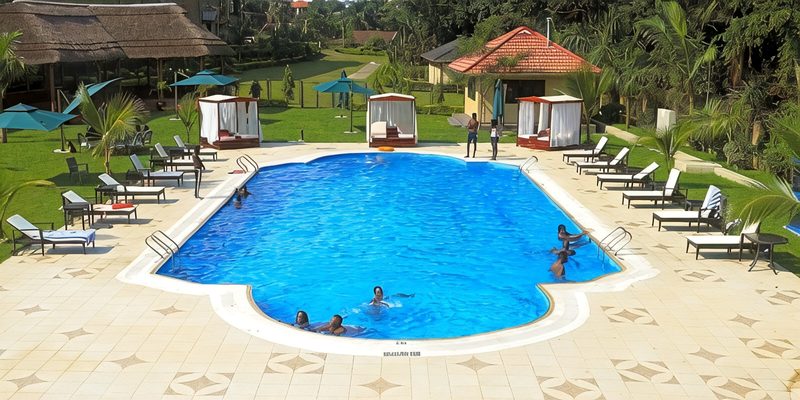
★★★★
Mid-Range
Best Western Premier Garden Hotel Entebbe
From $101 / night
Check Prices on Trip.com →
Packing Checklist
Bookmark this page — your progress is saved between visits
Need the full list with shopping links?
Climate-specific gear, brand recommendations, and what to leave at home.
View Uganda Packing List →Essential Tips
Insider knowledge and common pitfalls to avoid
Insider Knowledge
The rolex is Uganda's signature street food. You will find it everywhere: a chapati wrapped around a fried egg scrambled with tomatoes, onions, and sometimes cabbage. The name comes from 'rolled eggs,' not the watch. The best ones come from roadside stands where the cook has a charcoal-heated flat pan and makes the chapati fresh. In Kampala, the stands near the Old Taxi Park turn them out fastest during morning rush. The version with fresh avocado added is worth asking for even if it is not on the menu. At Jinja, the rolex carts near the river put-in points know that rafters come back starving. They make them double-sized.
Boda-boda motorcycle taxis are the fastest way through Kampala's traffic. Rush hour can turn a 3 km (1.9 mile) drive into a 90-minute ordeal. They are also the most dangerous part of any Uganda trip. Negotiate the fare before mounting. Insist on a helmet even if the driver does not offer one. Avoid them after dark and in rain when the accident rate spikes. For longer distances or airport transfers, hire a driver through your accommodation. The SafeBoda app provides vetted drivers with helmets. This removes most of the risk.
September's nsenene season may just be starting in the Lake Victoria basin. These are grasshoppers, caught at night using bright lights and metal sheets, then fried with salt and onions until crispy. The texture is close to a well-fried shallot. The flavor is nutty with a faint green undertone. Ugandans consider them a genuine treat, not a novelty. They appear on restaurant menus and street carts as a seasonal item. If you see them being sold in paper cones along the Entebbe road, eat them warm. They lose their crunch quickly.
Do not underestimate the driving distances if you are combining gorilla trekking in Bwindi with Murchison Falls or Jinja. Uganda is roughly the size of the United Kingdom. The roads between the southwest parks and the north are not motorway. Kampala to Bwindi is 8 to 10 hours depending on road conditions and which sector you are heading to. Internal flights from Entebbe or Kajjansi to airstrips near Bwindi and Murchison cut travel days out of your itinerary. They are worth the cost if your trip is under ten days. The flight into the Kihihi strip near Bwindi crosses the Rwenzori foothills. The view of the Mountains of the Moon on a clear morning, snow-capped peaks straddling the equator, is an experience in itself.
Avoid These Mistakes
Avoid booking gorilla permits too late. Travelers then try to rearrange an entire itinerary when preferred dates are sold out. Even in September's shoulder season, popular sectors like Buhoma can fill up two to three months ahead. The permit is the fixed point around which your entire Uganda trip should be built. It is not an afterthought slotted in once flights are booked. Start with the permit date. Build everything else around it.
Do not pack only for equatorial heat. Travelers arrive at Bwindi in the evening to discover that the southwestern highlands at 2,300 m (7,546 ft) get cold after sunset. The temperature in Kampala and the temperature at your gorilla lodge can differ by 15 degrees C (27 degrees F). Those who packed only shorts and t-shirts end up buying overpriced fleeces at the lodge gift shop. They shiver through dinner. Uganda's altitude variation, from 620 m (2,034 ft) at Lake Albert to over 5,000 m (16,404 ft) on the Rwenzoris, means you are packing for multiple climates on a single trip.
Do not treat Kampala as nothing more than an overnight transit stop between Entebbe Airport and the parks. The city has genuine depth: the Kasubi Tombs, the Ndere Centre performances, the chaos and energy of Owino Market, the panoramic views from the Gaddafi National Mosque terrace, and a street food scene anchored around the rolex and Ugandan-style pork roast. This rewards a full day of exploration. Spending at least one night in Kampala at the start of a trip helps you adjust to the pace and the altitude before heading deeper into the country.
Ready to plan your trip to Uganda?
Now that you've got the research covered, here's where to go next.
Explore More Activities in Uganda
Didn't see anything interesting yet?
Browse Viator's full catalog of tours, day trips, food experiences, and private guides in Uganda.
See All Uganda Tours on Viator